How to Power Portable Devices in Your Home or Office
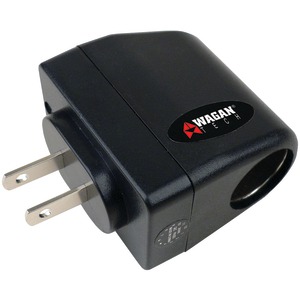
Cellular Device Class Power Converters
The majority of these wall adapters are made for use with devices which are charged or powered using a very small amount of current, normally in the milliamps range (tenths of an amp). AC to DC power adapters such as these typically supply around 500-milliamps. That of course is why these adapters are not well suited or even able to power devices that draw a larger amount of current in the range of amps. For this you will need a more capable AC to DC power converter. You will be pleased to know they are surprisingly efficient and affordable.
Portable Appliance Class Power Converters
These more powerful converters are used much the same as smaller converters; simply plug them into an AC outlet and they generate DC power. They also function the same as they are both constructed of transformers, capacitors, and other electronic components. However, this is also where they differ. The internal components must be up-sized or even in some cases super-sized in order to create the amount of amps required to run the more power hungry devices.
This class of power converter can typically deliver from 5 to 6 amps sustained over long periods of time without fail, but temperature and humidity can cause them to overheat when current loads are very high.
A power converter of this ability is commonly used with a small portable TV, portable refrigerators, and portable electric coolers. They can really be used to run just about anything you can imagine that requires up to 6-amps of 12-volt DC power. This converter is found here.
Hobbyist and Professional Class Power Converters
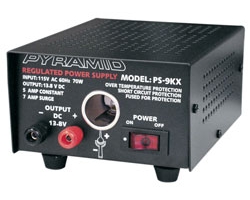
Typical hobbyist class converters can be found to supply from around 5 up to even 36-amps. That's a lot of power! And, it's just what you need for those much larger current loads such as a CB Radio, a water pump, or other DC motor.
These converters are perfectly suited to life in a workshop or lab, and any of them will look great sitting on your workbench. These all include an on/off toggle or rocker switch and a 3-foot power cord. The front panel will often include both a round accessory style outlet and banana jacks. The banana jacks normally use a threaded plastic nut for isolation which also allows the use of spade connectors. This and other converters can be found here.
Alternative Methods of Powering Portable Devices at Home
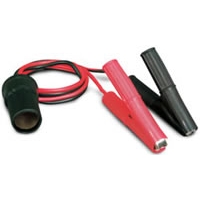
Clip-on adapter for 12-volt DC battery A power converter can't help you here; for this you'll need a 12-Volt DC battery. Preferably of the deep-cycle variety, but even a common small car or SUV battery will do the trick.
Many people are astonished when they learn how easy using the power directly from a car battery can be. An adapter such as the gator clips (model# RPPSAPS) simply clamp onto the battery's positive and negative power terminals and just like that you have created a portable power supply. This product can safely supply 11-amps of 12-Volt power continuously as long as the battery charge remains above 12-Volts. This battery adapter is found here.